

I got into Rome just after 8 p.m., the red Frecciarossa pulling into Roma Termini and the handful of people in my car already gathered at the exits. I had the feeling of settling back into the low valley of the Tiber; that the clusters of shining Tuscan towns spotted in the distance as the sun sunk into the sloping green hills, the higher mountain ranges beyond them as smudges against the horizon, all of it slid from the hot, streamlined panels of the train as it cleaved across the invisible line into Lazio.
Outside in the city, dusk hanging soft. Purpling loam over the dense white and terracotta apartment blocks along Via Gioberti, tripping into Piazza dell’Esquilino, empty save for green parrots wheeling overhead. Taking step by wide, piazza-length step down from Basilica Santa Maria Maggiore to Via Cavour.
Cavour slants gentle, then steeper down toward Capitoline Hill, ushering like a firm hand toward the historic centre of the city. Walking, surprised and suddenly aware of the city’s seven hills looming up around me, beyond its spires and domes, its loftiest stone pines sitting on the flat tops of each hill like sentries. Surprised for how it felt to be skirting the streets below them, around them, more familiar to me than I initially realized. Here, my body tells me to take a sharp left, down a narrow street hemmed in by slanting stone walls on either side, like walking inside an aqueduct. At the very end, lit up by its nighttime spotlights, the Colosseum waits in the fresh blue night.
There I wave racing scooters around me, cut through crowds and clusters of couples on the sidewalk angling for selfies. I take a narrow stone stair to its first landing, buy a cone of roast chestnuts from a sleepy man stoking the coals, continue down the staircase to the base of the Colosseum. Peeling a chestnut I walk slow, idly, around the north quadrant, minuscule under its arches. The moon is just past ripe and rises, making the dusky travertine glow.
Walking past, munching chestnuts, stopping every few minutes to turn back and look at the Colosseum shrinking away behind me, a lonely pull in the gut, always, to do it. I lose street names but know here is where an ancient section of aqueduct juts into the road, and here is where the road forks at the top of Circus Maximus, narrows and becomes shaded by towering plane trees where trattorias pop up and spill out onto the sidewalk. The same road wobbles like an amicable drunk at a gas pump for scooters, sidles up to a cool, green park then spills past an outdoor bar crowded with locals, voices clanging and bright, then tapers once more into the narrow streets of Testaccio.
An hour walk all told, train station to apartment courtyard, up the seven flights to apartment door with pauses for breath and glances out the tall windows pulled open to the night, to the courtyard’s palm and fig and pine trees. Surprise comes in the slight variation along the route, the time of day and its paired activities, but more sincere surprise in the familiarity. In the sense of knowing all along.
Though we treat them reverently, occasionally fearfully, there’s a certainty to surprise. Of surprises. They will happen whether we like them or not, want them or not, feel prepared for them or not.
Surprise was first about taking — the seizing of a place in a military attack. A surprise still has the ability to take your breath away but we’ve since inverted its interpretation, now we consider the surprise as something given to us.
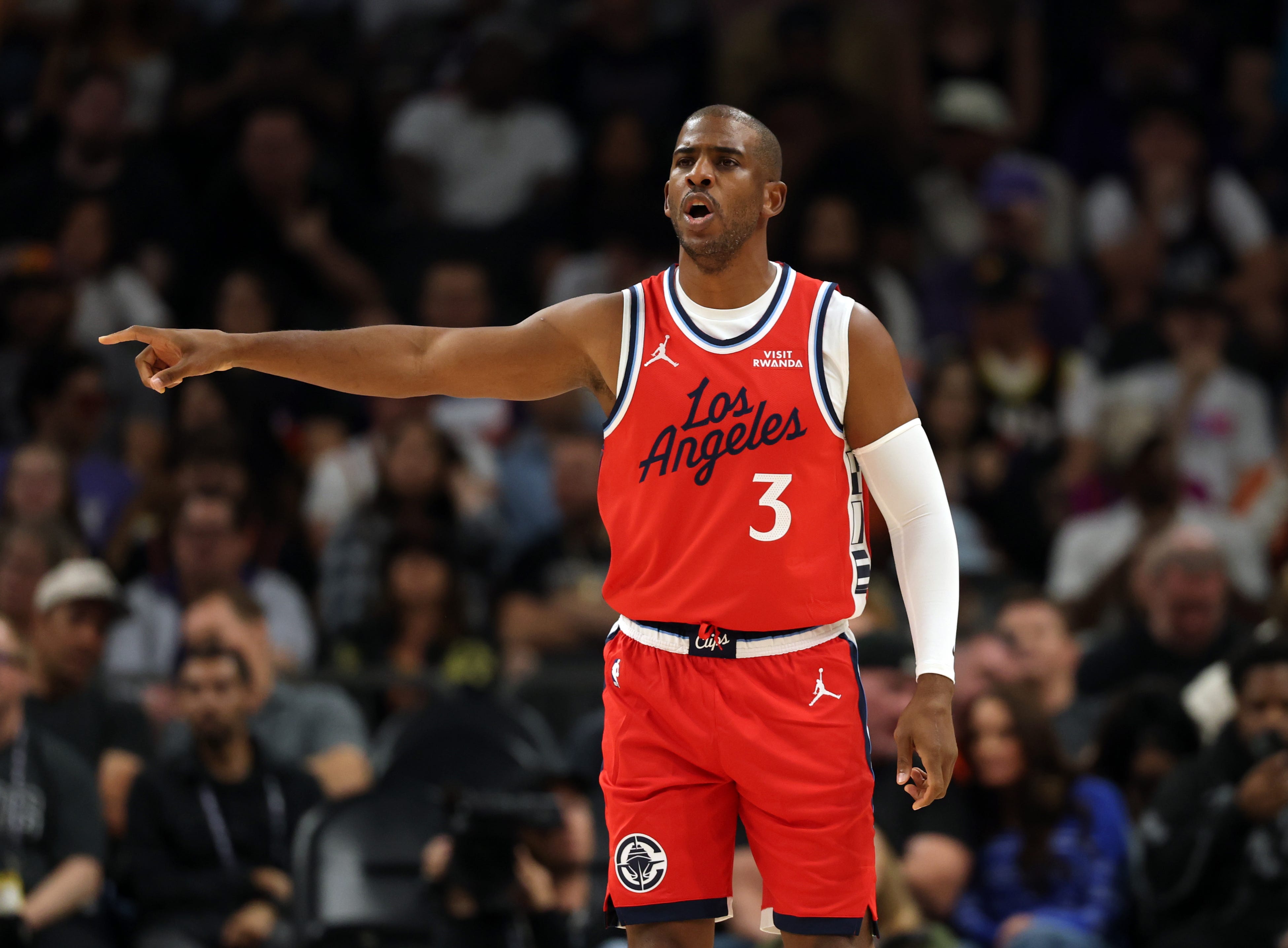
I missed Chris Paul’s retirement news when it broke, was in the middle of buying a giant squash from a Mennonite farmer at the St. Lawrence Market. A North Georgia Candy Roaster long as my arm and wide as my leg. No idea what to do with it, beaming all the same. I came across a headline tacked at the bottom of another story later that day, while prepping for NBA TV: ‘NBA veteran Paul to retire at end of season’, it said. At first my mind stuck on Paul as a given name. Paul? I said to myself, before realizing that even here, my mind was relegating him for another player I thought so familiar I should know them by one name. Like LeBron, like Melo. A surprise, my forgetting.
Paul’s played 20 seasons in the NBA, he’ll cherry-on-top it with this last Clippers lap to make it 21. The only NBA player who’s ever had his trade vetoed by the league in its history (technically, yes, David Stern was acting as the temporary owner of the Hornets at the time, the league reabsorbing the franchise briefly in tumult), the only NBA player who’s hit 20k+ points, 12k+ assists, and 6k+ rebounds.
There is an incandescent freneticism as baseline required to notch those numbers, an obsessive need to direct, which is what Paul does.
There’s an enduring quality to people who organize, who are simultaneously behind-the-scenes and out front of the action, conducting. As a kid, Paul spent summers working at his grandfather’s service station up in North Carolina’s northern reaches, skirting the Blue Ridge Mountains. Easy to picture a young Paul waving cars around, squinting determined past the glare on windshields to seek eye contact with the drivers inside.
Paul has always been a masterful weaver, gripping every loose thread of a game whether it’s fraying or coarse and spinning them into a fabric that stretches seasons. He’s taken very young teams and tightened them into shape; took a hapless Clippers group and turned them into a basketball colloquialism, Lob City, returned now as mayor emeritus. Still the farthest the franchise ever got and all because Paul has never been afraid to yell at people on the floor.
His toiling, his managerial approach to the floor, never got him the same easy fans as his closest peers in the league had. When Paul is celebrated it’s usually by drawing parallels of LeBron James, Dwyane Wade or Carmelo Anthony over to him. What’s easily missed is that when Wade or Anthony, before they retired, had gargantuan nights, and James does still, there are traces of Paul running through them. His barking instruction, his exactness, that narrowing stare and trace of a smirk as he threads yet another needle for himself or more likely, a teammate.
There’s a devotion to the way Paul plays basketball, a reverence that can be difficult to spot under all the bristling, tight energy. Those behind-the-back bounce passes in the thick of the paint, the lobs — inevitably heaved as Paul lifted from the floor, kicked his legs out in a jumping-jack flourish — from just shy of the logo, the crossover drives. The footwork that made him suddenly invisible to his defender, popping up on their other side for an open look. There were so many sequences when Paul, driving through traffic, blitzing all by himself, would waive his finger sharply around as if directing himself where to go, and if not for the other hand busy dribbling the ball the sense that it would be pointing too. Or when he’d take it upon himself to beat the clock, literally race it on foot rather than revert to the Hail Mary buzzer beater, making it down the full length of floor in three seconds with 1.2 left to spare. Why do it the easy way when the hard comes natural?
To work within the game that way is to trust fall night after night into its eddies and riptides, seeing yourself as vessel, only. Paul will undoubtably be painted stoic this season for never winning a title and still producing the kind of NBA career that he did, a portrayal of consolation. But Paul has more in common with the Stoics themselves, their long-winded logic (It is either day or night. It is day. Therefore, it is not night) and systematic ethics. Their worry of Stoic philosophy falling into a cult of personality so rejecting the name Zenonism, after their founder, and instead defaulting to being referred to by the decorative colonnade (stoa poikile, or “painted porch”) they would meet up at and chat around.
It’s not difficult to picture Paul there, endlessly discussing logic, its assertions, and the most efficient way to get to the point. His is a mind that could unravel the Stoics, short-circuit them, who’d eventually grow anxious with Paul, weary, side-eye each other and murmur in the shade of a colonnade that this guy is going to solve all our existential riddles pretty quick, and then what will we have to talk about all day?
Better for them, and us, that Paul found basketball some 2,300 years later. An inexhaustible vehicle for all that furrowing precision. An exasperating, sublime surprise.
If it wasn't for dribbling his other hand would ABSOLUTELY be pointing 👉
I wonder if CP3 enjoys a chestnut