

The NBA wants 2019 back
Exploring the nostalgia driving this year's NBA free agency, starting with Kawhi Leonard landing back in Toronto.
July 2019 was my first Summer League. It was also Zion Williamson, and an earthquake’s, NBA debut.
I remember sitting in the media riser seats at the south end of Thomas & Mack with Blake and Wolstat, my first night there, and feeling the ground under my chair vibrate. At first, I thought it was just reverb of the crowd and their excitement over Williamson’s thundering dunks and the promise, every time the ball hit his hands, of more. But then the vibration intensified, shifted to shaking. I wondered out loud whether there were people under our section, shaking the risers, picturing the chute of a tunnel and an impatient marching band waiting for halftime.
Now I know there is no such tunnel at that end of T&M, and that the seats I pictured as temporary risers are actually poured concrete, but the idea of an earthquake was so far out of my brain’s calculus, I had no reference point for how one felt. Instead, it took people beginning to stream up the aisles toward the exits — Californians, for sure, with plenty of seismic muscle memory — and the jumbotron and speaker stack above centre court slowly swaying like a pendulum for me to clue in.
The other big news of that Summer League was Kawhi Leonard.
The Raptors had just won their first title, I’d barely made a curve in the brim of the ‘Champions’ hat I’d packed for Vegas, and the news cycle was dominated with whether or not Leonard would stay in Toronto. Kawhi Watch was an all-consuming matter in the city. I went on the same morning shows I did during the Raptors playoff run but now, rather than talk about the team’s chances of winning, I talked about the chances of the central figure of that title staying. The former had been based in tangible metrics with emotional flourish thrown in, the latter was all deduction, like reading tea leaves to people looking for some, any, sign of a person’s mental calculus. His decision.
And that was the framing. The decision. In a league where becoming your own outward brand is considered just as crucial to success as on-court performance, Leonard has always been a clandestine figure. He’s not on social media beyond business, doesn’t say much in interviews, and is just generally quiet. I once stood next to him in an empty postgame tunnel, just the two of us for a solid minute, before looking up and realising the person in a giant sweater was him. How was anyone supposed to know which way he was leaning, or what would factor into his decision, knowing as little as we did?
There were fans firing up flight path scanners, cross-referencing private jet serial numbers with incoming and outgoing air traffic. A plea disguised as a lifelong offer should he stay, called Kawhi & Dine, went out from Toronto restaurants, with decals posted on the doors of establishments where Leonard could eat on the house if he stayed. It was only a few weeks but the feeling of waiting on that decision, plus the sustained euphoria in the city from winning the title, made it all feel like a hazy middle-time.
At Summer League I fielded the question every time I met someone new and they asked where I was from. It being my first time there, it happened a lot. When I inevitably ran into those same people again on the concourse, or in the gyms and media room, even out in the casinos after the games, they’d ask for an update. Had I seen Masai Ujiri in the chute (the real chute) of T&M, having clandestine conversations in the literal shadows? Did I think Leonard was going to show up and sit courtside for the Raptors first few games, or show up at all? What did I think was taking so long?
Once, I mentioned that Nick Nurse had been on my flight, annoyingly asking for help stowing his guitar. The response was so enthusiastic I worried whether it would be reported, and then whether it would land in the pro or con column of endlessly tallying factors all adding up to the decision. I felt a bit like a celebrity known for one contextually immediate but ultimately useless thing.
Like everyone, I hoped Leonard would choose to stay and run it back with a team that was very good — and proved to be very good the next season, up until the pandemic brought the world and league to a halt. As someone who tends to overanalyse most of their own decisions, I thought that the time it was taking for Leonard to make his mind up spoke to a lot of factors in play (which we now know included everything from a request for an ownership stake in the Toronto Maple Leafs to $10 million per year in additional sponsorship income). But ultimately, I thought he would leave, and not for any more concrete reason than it’s what Toronto fans are used to of superstar-calibre athletes.
Leonard is coming back to Toronto next season. The deal was formalized close to the start of free agency, nearly seven years to the day he made up his mind to leave the city. Leading up to the final announcement felt strange, a deja vu of waiting on Leonard but with the stakes shifted. Even the language of this decision had changed: Leonard was “open” to Toronto, he was “comfortable” with the city and the team. All the pining and urgency there the first time was gone.
Still, I find myself trepidatious. For the basketball practicalities, how Leonard will fare in Darko Rajaković’s up-tempo, high-touch system. How Scottie Barnes will operate as navigator and distributor for him (I can’t help think of Kyle Lowry’s perfect if initially begrudging fit alongside Leonard, his aptitude of the floor and second-sight ability to manage it); whether Leonard will maintain the sort of social and physical distance from his new teammates that he kept with the Clippers.
I also find myself wary of the nostalgia.
Around the league, as free agency looms, some of the biggest and closely tracked moves harken back to the same era as Leonard’s decision — back to 2019. The possibility of LeBron James and Steph Curry playing together germinated with the two over the course of Team USA’s run in the Paris Olympics, but a big two of them in Golden State, plus Draymond Green and Anthony Davis, feels like a funhouse mirror version of the Warriors that went back-to-back against Cleveland. So does James going back to Cleveland, the other destination reportedly on the table.
After what’s looked like the most enjoyable and restful season away from the NBA, Ben Simmons floated the idea of returning to the Sixers. The last franchise Simmons played for were the Clippers, where he was teammates with Leonard. Judging from his social media, Simmons has spent the better part of this year fishing, swimming, and out on the open ocean around his native Melbourne (and the Bahamas, now the Red Sea). For a person who seemed stuck in a Sisyphean loop of development, perennially primed for a comeback season, and who appeared, mostly, uncomfortable with his vocation, it was almost a relief when Simmons stepped away. Not because of what cruder framing posits, that Simmons was always a bust, but because it feels good to see a person make a decision that has them happy.
The very first time Simmons was named to an NBA All-Star team, it’s worth noting, was 2019.
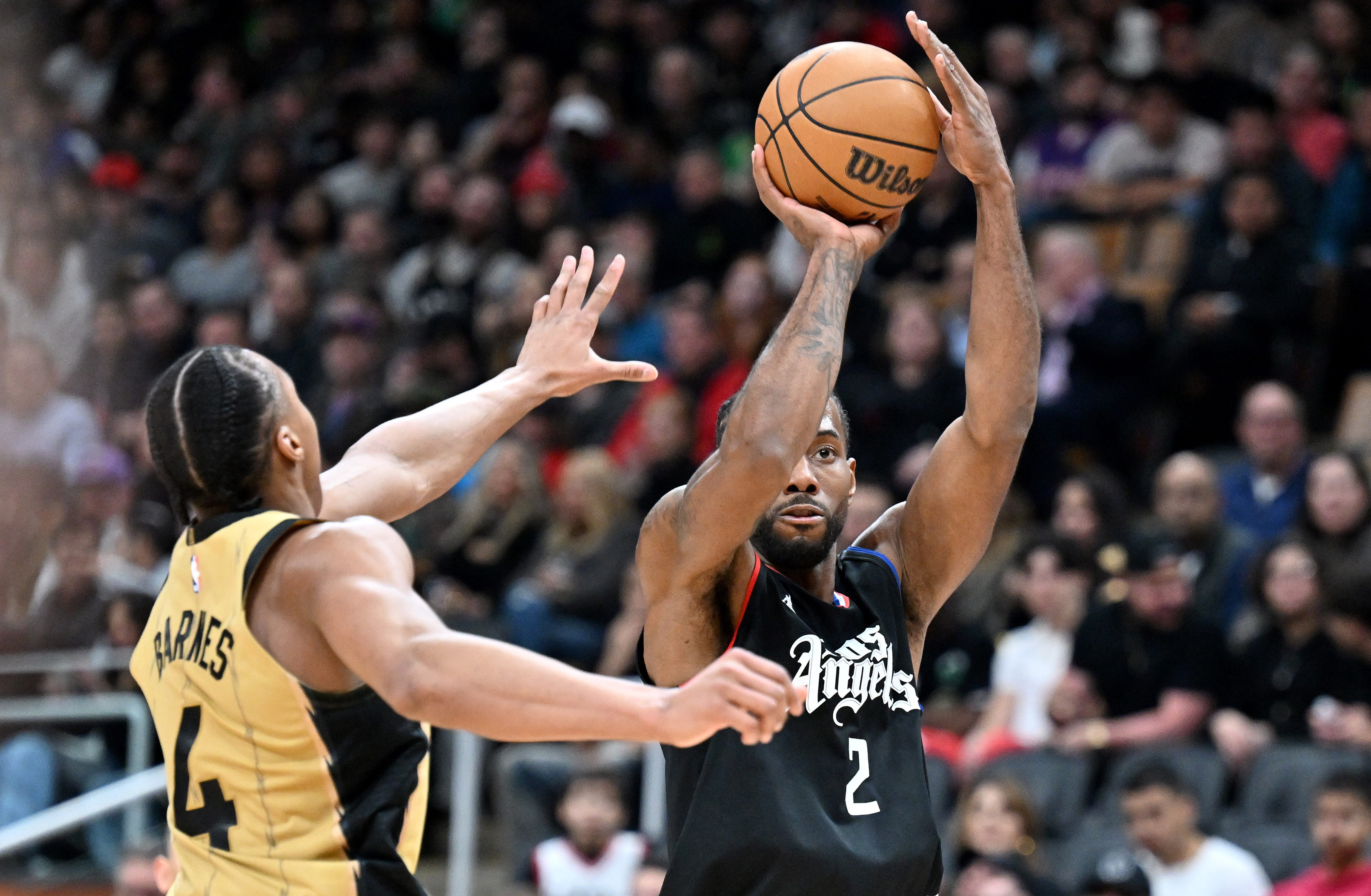
Nostalgia is central to fandom. One of the components of building a winning team is for that team to also be likeable, root-for-able. Whether that’s because they’re interesting, fun, or scratch a nostalgic itch are all viable means to that end, but nostalgia is the easiest and quickest route.
If a team can make a fan remember an exciting run, an intense shot or sequence, the way it felt to celebrate a win or a title, it can capitalise on the resulting goodwill (and probably, also, capitalise in a material way). Bad decisions get muted, losses fuzzed out. Really competitive teams in the prime of their runs don’t rely on nostalgia at all, they don’t need to, but let a couple struggling seasons slip by and it can be a useful way to stall, buy time before deciding on a teardown and the requisite years (and fan patience) those take.
Maybe this is all just harkening back to thinking of what life and the world felt like pre-Covid. Nostalgia for years that got ripped away and feel blipped out in the retrospect of memory; a way to get time back.
The most interesting twist of how nostalgia-focused this free agency period feels, so far, is how much of it is player-driven — and largely by the old guard. It’s a new twist on autonomy as the superstars who can still demand it age, with the ability of these players to tap into their own nostalgia and wield in service of their sentimental whims over long-term competitive benefit. Beyond Leonard (who said he’s open to retiring a Raptor, which, we’ll see), the other moves seem short-term. For, I’d go so far to say, fun.
James hasn’t put a hard cap on how many seasons he has left but it does certainly feel like he’s tapering his career to a close. The realistic physical runway of a Golden State group of him, Curry, Green, Davis et al. is short. A glory speedrun with no real (spoken, at least) hard stakes. They’re not going to be terrible, people will want to watch them, and they’ll all probably have a good time. If he goes to Cleveland it’s a homecoming, a chance to bask in free, easy love for a season. And maybe returning to a franchise wholly freed from The Process would actually take the pressure and expectation off Simmons, for the first time in his career.
As slow as I am to come around on Leonard back in Toronto, and I will, the nostalgia in play doesn’t feel detrimental. The Raptors have moved on; even the most painful parts of that change, as the team gradually lost core components like a rocket lifting to space, now have the buffer of multiple seasons. Less a team looking to Leonard to shape its way forward, the proof of his past doesn’t feel all that hefty or limiting in its weight to be up front again. It’s been long enough that some fans won’t even remember what those dragged out weeks seven Julys ago felt like, the emotional lurch as the dust settled. They get to shed their second-hand nostalgia for brand new optimism, and we all get to witness the rarity of a star come back.
No Simmons in Philly, please and thank you. As for LeBron, the Gods of Good Health and Fine Aging would need to bless the entire Golden State experiment, when we all know the Basketball Gods would mostly laugh, cruelly, and point, mockingly, at the entire roster, should it be constructed. Cleveland as his final destination makes far more sense, but does a quartet of him, Spida, Harden and Mobley, along with flotsam-and-jetsam do more than intrigue and excite during the regular season?
As for The Klaw, the irony would be that he's suspended for a season after the trade goes through, and Toronto is punished for taking a risk they never needed in the first place.
The clock has struck July and the NBA’s great bazaar of human potential bursts wide open. We are stepping directly into the fantastical pages of Gabriel García Márquez’s One Hundred Years of Solitude, where the surreal becomes ordinary, and the marvelous town of Macondo is reborn in the neon glow of free agency negotiation rooms. Just as Melquíades brought wondrous, reality-bending inventions to a remote village, general managers are now wielding trade assets like ancient alchemy, trying to transmute draft capital into golden championship banners.
Who will find their own beautiful, isolated paradise? And who is destined for a century of basketball solitude? The anticipation for the magic realism of the NBA open market is absolutely exhilarating.