

The last Odyssey of LeBron James
How our modern and classic heroes wrestle with time, and what vulnerability James shows in this final decision.
He is loved as kings are loved, for their power and for their benevolence, and also for their distance.
— Louisa Thomas, ‘LeBron James: An Odyssey’, The New Yorker
For a book about time, The Odyssey is not all that concerned with it.
We don’t meet Odysseus, its namesake, until Book 5, when the nymph Calypso leads the reader to our hero who is crying on the beach. At this point Odysseus has been stuck on Calypso’s island for seven years and Hermes, with a missive from Zeus, tells the nymph to finally send him home. Though she’s trapped him there, when Calypso finds him she seems fairly fed up with Odysseus, telling him to “Stop grieving, please. You need not waste your life.” Like maybe having this miserable guy around for seven years was wearing on her.
Though Odysseus and all the story’s mortal characters are continually and persistently shown to be at the whims of the gods, none show a particular urgency when it comes to time. There are long sojourns by Odysseus and Telemachus, whose grip on time flickers and often gets waylaid by the vibe of the moment. Penelope probably has the firmest handle on time given her trick of weaving and unravelling Laertes’ burial shroud every night for the first three years of Odysseus’ absence, but there’s still a generosity reflected in her actions to time and its passing. Her work only begets more work.
Even when Odysseus finally makes it home in Book 13, it takes until Book 20 for him to launch an attack on the suitors squatting in his home, and until Book 23 to reveal himself to Penelope. He surveys the chaos befallen his wife and son, schemes with Athena, and seems to enjoy his time disguised as an older beggar wandering around Ithaca.
Time, like the characters in the The Odyssey, is only doing what it’s made to. It happens, it passes.
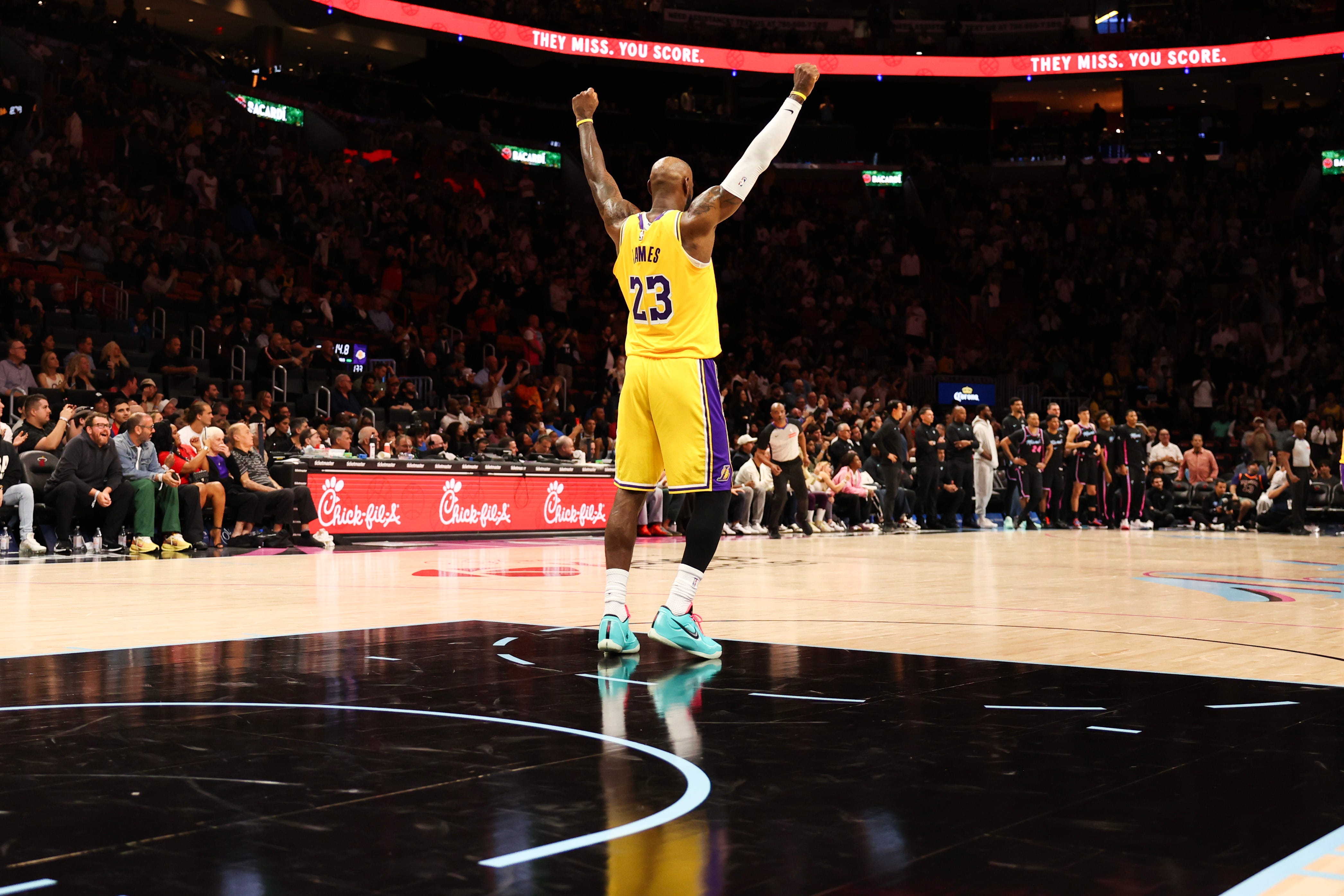
LeBron James announced this week he would start next season in Philadelphia, playing for the 76ers. It’s been less than a month since James informed the Lakers he would be playing for another team when the 2026-2027 season started, just 27 days as of today. In NBA time it felt like an eon.
Over the past three weeks James’ name had been linked to nearly every self-styled serious franchise, beyond the initial would-be suitors of Cleveland and Golden State. The Warriors were intriguing, but I wonder if that felt too much like trick basketball for James, a season of Harlem Globetrotter-esque play and being treated like a circus coming to town. The Cavs were the team I heard most from people who are closer to James than I am, the idea of a homecoming and being beloved for a last season, a warm bath every night. In the end James went for neither spectacle nor comfort, he went to the team where he could still compete.
James has made a career of firsts, both in optics and records, but this first feels wholly surprising. A two-year, $8 million contract, a promise and a pay cut, and for the first time, going somewhere he wasn’t needed or wanted. That reads extreme but in terms of need, the Sixers were already competitively complete and as far as want, they never showed the open desirousness of the Cavs, who’ve held off securing James Harden or Warriors, where Draymond Green took a pay cut to clear cap space.
Only in James’ first big move perhaps, when he chose Miami and made spectacle out of The Decision, did he operate from the same place of longing as now. The Heat and Pat Riley, tenting his fingers no doubt, definitely wanted James, but the drop-everything demand James made for himself came after he brought a title to Miami. Deciding to go there was out of the same urge we all have to leave home, to hear your name in somebody else’s mouth.
Picking Philadelphia stirs up some of that same vulnerability, underscored by the statement James posted to share his decision (lowercase this time, and just on Twitter):
I thought I was done when the season ended. I wasn't ready to announce it, and I knew I needed some time to really decide, but I was pretty sure I played my last game. I was honest at that last press conference when I said I needed to look at myself and deicide if I still love this game. I still truly love this game, and I have more to give.
The last few weeks have really been special. I’ve never been able to have no clue what to do and take real time to just think. I’ve had an incredible few months with all the people I love trying to figure it all out. This is my last decision. I’m not going for money. I’m not going for family. What am I really playing for at this point?
I still want to sacrifice. I still want to work. I still want to grind. I still want to compete, to win and to have a chance at the feeling of winning another championship.
I believe I can help make the Philadelphia 76ers a championship team and I am so excited to energize a new fan base and start this incredible journey one last time.
Thank you LA. Miami I’ll forever love and Northeast Ohio will always [sic] home!
What jumped out is the way James described time over the last few weeks. He paints it as a long, languid period to dwell in and think, as “real time” to stretch his legs in, to treat like a landscape and learn the contours of. If we’re counting the time before the Lakers announced James wasn’t coming back, tacking on the weeks after the team’s postseason ended on May 11th, that’s still only a few extra weeks. What’s striking is that over the span of 23 seasons, it’s probably some of the longest idle professional time James has ever had.
He presents the unknown like a gift: I’ve never been able to have no clue what to do. A testament to how much of his career — and his life with it — has been mapped out, starting at 17 on the cover of Sports Illustrated with the headline of “The Chosen One” prophetically underscoring his high schooler’s face. If anyone has earned some self-aggrandising, it’s James, but that’s not what this was. This is the rare and earnest reveal that comes, if glimpsing, from a person who can’t quite wrest themselves away from stakes but who has also freshly felt the jaws of fortune release them.
I’ve never been able to have no clue what to do. I keep coming back to it. The double-negative, the paradox. The inference there has always been a target and an arrow rocketing toward it, one set by James and the other launched by his hand, simultaneously. I blame (and thank) the great Louisa Thomas for firmly planting the idea in my head with her work this week — paralleling James’ career with each of The Odyssey’s Books — but how is that line not a colloquial translation of Odysseus himself, staring out at the sea from one waylaid beach or another, rife with grief but also, tingling underneath it, excitement? Odysseus who is fated to wander and roam, whose nature it is to strike out for the next horizon. Who has won wars, is remembered in epics, got the hero’s welcome and can’t, for the life of him, hang it up.
I’ve never been able to have no clue what to do. Here’s the hero, telling us who he is.
Urgency pressed upon time is a contemporary conceit. The concept of optimising every minute, squeezing every second for what it’s worth, a modern pitfall. It hinges on the idea that the next thing is the better thing and so, we should hurry up and get there. Even the simple practice of “being present” is now presented with steps, as if the current moment is not something we could hope to find on our own.
In The Odyssey, along with being a given, time is presented as another landscape to chart and to cross; a tactile place to gather information about. There’s an inevitability to it even as the book’s major characters watch people around them die or be killed, have their time cut short.
From an ancient Greek perspective, and living in a world ruled by mercurial gods — it made sense: time wasn’t yours to begin with. It was meted out in advance, determined from birth. Perhaps with a good deed or currying the gods’ favour you could pocket a little bit extra or else wrestle some back, but even then it wasn’t static. Wasn’t yours. Time, taken this way, both borrowed and a given.
It’s why reading the book can feel stilted in sections, not so propulsive where there isn’t a monster to fell or god to trick (with the help of another god). It’s also where translation can miss. Patience, or that bone-deep acceptance of time, doesn’t exist for us as it did Homer or his characters. To treat time as a landscape is to cease to wrestle with time as a figure, accepting it as inescapable.
I’ve never been able to have no clue what to do.
A lament and a wish.
Damn, you’re a good writer.
Just so beautifully written! I wish he had joined Warriors though! Please could you do a piece at some point on Steph? Something like this that gives such deep poetic insight into what drives him or how he has that energy and joy?