

Separating artifice from artist
Cristiano Ronaldo, Kobe Bryant, and the enduring mental gymnastics that abstract athletes of note from accusations of harm.
“She kept saying ‘no,’ ‘don’t do it.’”
“I apologized afterwards.”
“She said ‘no’ and ‘stop’ several times.”
Those were statements made by Cristiano Ronaldo to his legal team in September 2009, as part of an internal questionnaire regarding accusations of rape against him. His accuser, Kathryn Mayorga, claimed he raped her in a Las Vegas hotel earlier that year. Mayorga initially settled with Ronaldo for $375,000, but in 2018 filed a lawsuit seeking a far greater sum while claiming Ronaldo’s lawyers had taken advantage of her fragile emotional state to coerce her into signing the settlement and a non-disclosure agreement (Der Spiegel also reported a number of disgusting details on how Ronaldo’s team attempted to smear and discredit Mayorga during initial proceedings, including shadowing her with a private investigator who went so far as to pull the number on her marriage certificate).
The documents containing those Ronaldo quotes never made it into Mayorga’s lawsuit claim. A judge found they were leaked illegally by the whistleblower portal Football Leaks, and that subsequent reporting from Der Spiegel could not be used. The case was eventually thrown out.
But Ronaldo said those things. He admitted to raping Kathryn Mayorga, whether the admission was “legal” or not.
And it didn’t matter at all.
Ronaldo continued his rise and became one of the world’s most famous and well-paid athletes, with a Bloomberg estimated net worth of $1.4 billion as of a few months ago. He’s been the subject of dozens of fawning media profiles and has, at publication, 672 million Instagram followers. It’s as if his admission to a horrific crime simply never happened.
I found myself thinking of Ronaldo recently when Bam Adebayo unseated Kobe Bryant for second on the NBA’s single-game scoring list with 83 points, kicking off a new round of Kobe Discourse. A senior writer at the New York fucking Times crying that Adebayo should have stopped short of 81 out of some sort of historical respect would have simply been comical in most other settings; Bryant being the one who held the achievement in question, though, made it nauseating.
Bryant, for those unaware, was accused of felony sexual assault in July, 2003 by a 19-year-old woman who alleged he raped her in his hotel room in Colorado. The criminal case would eventually be dropped when the accuser decided not to testify; a civil case was settled out of court.
Bryant’s case isn’t identical to Ronaldo’s. The NBA star never admitted to anything non-consensual, whether on or “off” the record, unlike Ronaldo. There is no firm proof.
As is often the case in these situations, though, the burdens of legal proof are at odds with basic common sense. The woman’s blood was found on Bryant’s shirt; one of her high school friends, a bellman at the resort in question, said she appeared shaken and crying, and told him “that Kobe Bryant had forced sex with her” in the immediate aftermath. But inconsistencies in the accuser’s testimony, plus her unwillingness to testify, led to the case being dropped and Bryant effectively being fully exonerated in the public eye.
As anyone with even passing knowledge of sexual assault cases is well aware, though, those sorts of inconsistencies don’t remotely qualify as proof no crime occurred. Traumatic events often lead to hazy recollections as the brain prioritizes survival over detailed memory. Numerous studies, like this one, put the lie to “she changed her story” as evidence of a false accusation. It’s also not remotely uncommon for sexual assault victims to avoid parts or all of the legal process for reasons ranging from fear of retaliation to publicity, fears of believability and several others.
These realities, combined with ineffective legal and societal burdens of proof, play a key role in RAINN’s estimate that 98% of sexual assault perpetrators walk free.
Tolerance for men committing sexual crimes is sadly back on the rise after one of its only brief lulls in modern history. Even at the height of the #MeToo movement, many big-time athletes still seemed impervious to any accountability. Society’s willful amnesia has always felt especially strong when it comes to our favorite players. Multiple parties are to blame in this erosion of simple morality.
Leagues and teams, always motivated by dollars above all, regularly buttress their athletes from consequences for sexual assault or abuse. The NBA’s track record is especially embarrassing, from Bryant to Derrick Rose to Miles Bridges. Jaxon Hayes got a longer suspension for pushing a mascot (1 game) than for violence against his then-girlfriend (0 games, following an investigation in which the NBA never even spoke with the alleged victim).
Failures of modern media are also on display here. Ronaldo is perhaps the most egregious example; his case has been shockingly under-covered relative to his overall profile. I’ve had multiple professed diehard soccer fan friends tell me within the past couple years they had never even heard of the accusations against him. That shouldn’t be possible for such a serious incident involving such a famous person.
Bryant’s case was well documented, which in a way makes the two-plus decades of fawning coverage he’s received since all the more maddening. Some of the sport’s most successful journalists helped sweep Bryant’s transgressions (admitted and otherwise) under the rug 20-plus years ago. Many of the same folks and outlets then spent years tripping over each other to help us conveniently forget about Bryant’s ugly side, papering it over with glowing profiles of “Mamba Mentality” powered by access they could only get by being on his and his camp’s good side.
In the end the fault really lies with all of us collectively. Ronaldo’s case has absolutely been under-covered, but millions of people still know about it — certainly including some high percentage of his fans. Anyone age ~35 or older distinctly remembers the Bryant case. What makes us so eager to selectively forget, to allow these men to continue their lives of fame and fortune at the expense of innocent women?
The horse I’m writing this from isn’t (quite) as high as it sounds. I’m no shining beacon of the right way to approach this stuff. As a high schooler who wasn’t especially into basketball during the Bryant case, I never read any of the details; even when I became an NBA diehard years later, I never bothered. All my more informed friends, and all the journalists I followed, seemed convinced Kobe was in the clear. Why waste my time?
In my early years cosplaying as an NBA journalist, I even contributed in incredibly minor ways to the running Kobe whitewash. I posted clips and quotes, debated his place among all-time greats, the works.
I even subconsciously justified Byrant’s admitted infidelity to his wife. He’s a famous athlete! This is par for the course. He’s just an entertainer. I can separate the art from the artist.
I wish I could implore my younger self to think about what those excuses really mean.
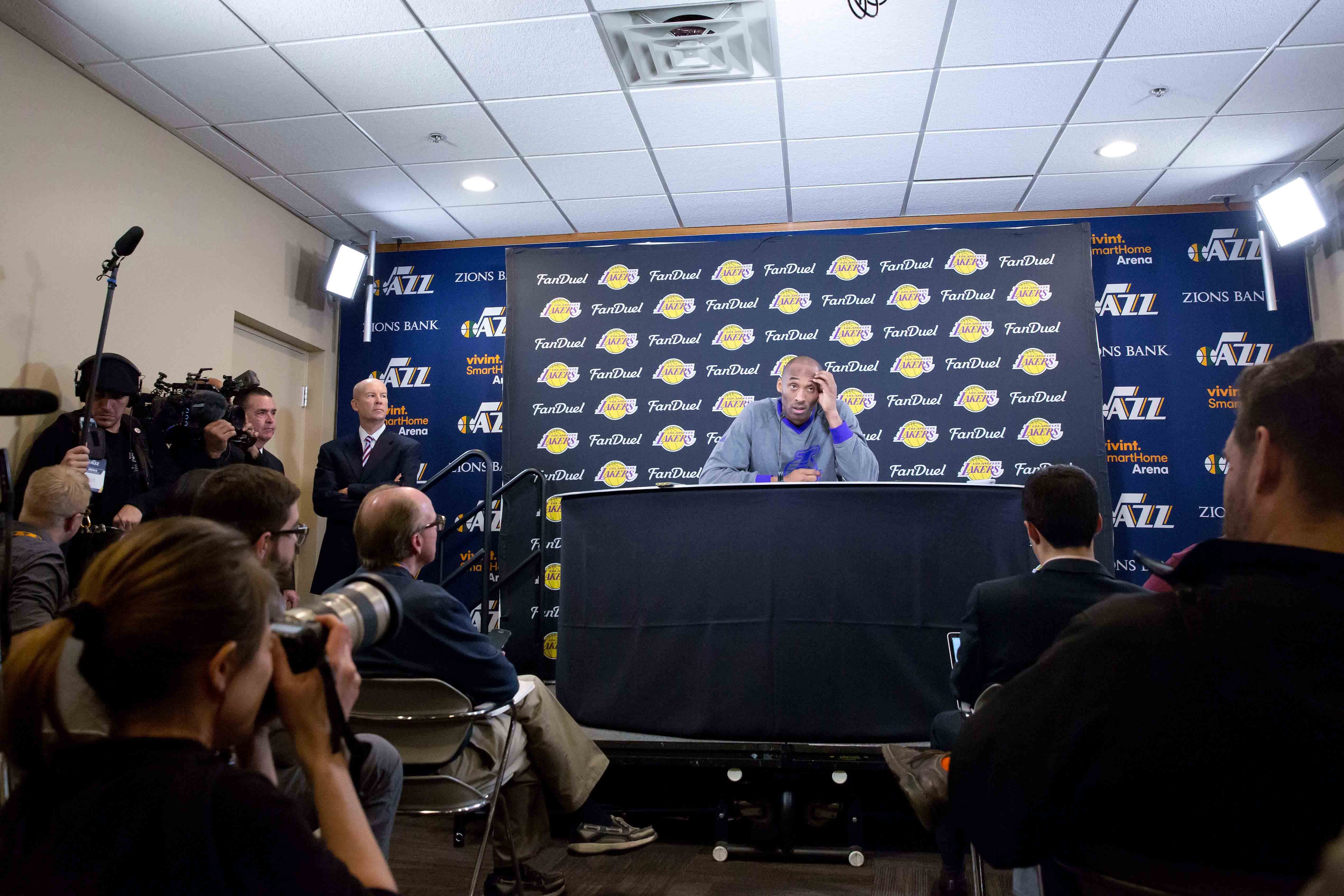
“Separating the art from the artist” implies some inherent right to their art, no matter the cost involved in creating it. That’s especially true with the Michael Jacksons and Kobe Bryants of the world; why should all of society be deprived of their culturally massive work due to their individual transgressions? The premise sounds reasonable until you spend a solid 20 seconds thinking about it.
For one, these are not singular representations of any culture. Michael Jackson was not the only pop star; someone who wanted to listen to some great 80s/90s pop that helped define modern music would have dozens (hundreds?) of other choices even if they swore off his catalog entirely. Likewise, LA Lakers fans have multiple other top-15 players of all-time among their franchise ranks. Kobe wasn’t the only legend who donned the purple and gold, it turns out.
That’s not even the most flawed element of the logic. By presuming we can somehow separate these men from their performances, we’re turning their actions into victimless crimes. Imagine walking up to Kathryn Mayorga and telling her that actually, the pain and horror she’s endured over the last decade-and-a-half since that night in Ronaldo’s hotel room — and the fact that he’s gone unpunished for it while becoming a billionaire in the process — are all worth it because the world got to experience Ronaldo’s athletic feats.
That’s fucking insane, right? But that’s what we’re saying.
And it’s time to stop fooling ourselves.
 | A guest post by
|