

Making the perfect villain
The rise, fall, and redemption of Dillion Brooks.
A good villain only exists in fiction and in sports.
In movies, a villain’s purpose is simply to give the hero one. But when written well, the villain is often more captivating than the person you’re supposed to root for.
So, what makes someone a compelling villain?
There’s a delicacy to it. They can’t be so evil that it disturbs you — this is where fictional villains veer from their real-life counterparts. A perfect villain peels back the mask just enough to reveal something human. They weren’t born this way, somewhere along the line, something broke them. And yet they must pose a real threat.
They’re supposed to haunt you and charm you at the same time.
Wrestling is the perfect blend of fiction and sports, where storybook villains come to life under bright lights and the understanding that everyone is in on something. In other sports, the lines blur. It’s a place where villains can exist without causing real harm, but being a good one is difficult. There is a thin line one must balance between tyranny and theater.
There are also limitations.
Kevin Durant became a villain to many when he left OKC. Tyrese Haliburton, a proud wrestling fan, has tried on the persona in flashes. But neither of them will ever be a true villain, because their greatness defines them first.
At the same time, a villain must possess enough power to be convincing. Even if he doesn’t win the final battle, he must make you believe — even just for a second — that it was possible.
Draymond Green was once a perfect villain — a phenomenal player but not a superstar, always at the scene of the crime — but the misdeeds eventually piled too high. Patrick Beverley tried, but once his NBA career ended, his behavior became erratic as he fought to stay relevant. Now that he’s been arrested on a felony assault charge, he’s erased from the conversation entirely.
Dillon Brooks saw an opening. The NBA was looking for a villain.
His rise was deliberate, and he executed it perfectly.
Act 1. The Nice Guy
Just as someone hides their less appealing traits when endearing themselves to a romantic interest, Dillon Brooks tucked away his most chaotic impulses at the earliest stages of his career. NBA money is nothing to be played with.
Dillon Brooks showed up to work and played hard, wooing the Grizzlies with his two-way abilities.
This is how he got his contract.
Now, the stage was set for his real ascent to begin.
Act II. The Pivot
Dillon Brooks knew he wouldn’t become famous through talent alone. A decent player can squeeze out some notoriety underneath the bright lights of New York or L.A., but Memphis is different. On a small-market team, it’s nearly impossible for a role player to become a national name. Dillon had to get creative.
Through sheer menace, he did the impossible. He poked every bear he could, pestering the NBA’s elite like a house cat convinced it’s a lion. No one was safe, but his most frequent targets were the ones guaranteed to shriek the loudest.
He planted early seeds with Draymond Green, earning frequent mentions on his podcast without ever appearing on the show. He made enemies out of the entire Warriors roster — even Steve Kerr condemned him for breaking “the code” after the foul that injured Gary Payton II.
And yes, there were times when peculiar physicality made you wonder… Did he mean to do that?
Like any villain, his power came from unflinching commitment. He embraced his role as the young team’s scrappy leader, letting his spirit seep into their identity.
Off the court, he led dance lines in sunglasses and flashy outfits. On the court, he keyed in on his target, taunts decorating his signature one-on-one defense.
Here’s where his plan faltered: His defensive prowess wasn’t enough to distract from his rapid offensive decline. While his antics had turned him into a villain, his inefficiency turned him into a joke.
His signature moment came after a Game 2 defeat vs. the Lakers in the 2023 playoffs. Dillon called LeBron James “old” and dared him to give him 40 points — something I found painful as a suffering Grizzlies fan but delicious as a sports fan. In that moment — calling the greatest player of all time “old” on the biggest stage — Dillon went full heel. I had to respect it.
Where he disappointed me was when, after losing, he refused to speak to media. A true villain doesn’t cower when the battle doesn’t go his way. He bares his teeth, a warning for what’s to come.
Act III. The Reckoning
The greatest thing to ever happen to Dillon Brooks was being abandoned by his team.
After a season defined by a Ja Morant gun scandal and a disastrous Lakers series that concluded with LeBron taunting Brooks on Instagram while the world laughed, Grizzlies general manager Zach Kleiman was staring at a sinking ship.
So the Grizzlies went to Shams Charania and told him that free agent Dillon Brooks — heart of the team, now a national laughingstock — would not be returning to the Grizzlies “under any circumstances.” It was easiest to tie their failures to someone who the public already hated. The phrasing was dramatic enough to overshadow the more delicate matters.
The mistake wasn’t letting him go. The mistake was doing it loudly.
By tossing the easiest target overboard, the Grizzlies unintentionally gave Dillon something priceless: an origin story. Every great villain must be wronged. And there he was, betrayed by the only people who’d believed in him.
It was perfect.
His one-year Houston tenure was smooth. He didn’t fully back away from his villainy, but he let his game speak louder. He earned people’s respect. Then the Rockets threw him into a trade for Kevin Durant, and a newly-respected Dillon Brooks was off to Phoenix, his third home in three years.
Act IV. The Rise of The Villain
It shouldn’t be surprising that Dillon is thriving in his first season in Phoenix.
Being given a green light on a franchise with no expectations has unlocked the best version of him. He’s helped bring a defensive identity to a team that has famously lacked one for years, and his offense has come along with it. Suddenly, the same antics that once repulsed people are being praised as culture-shifting.
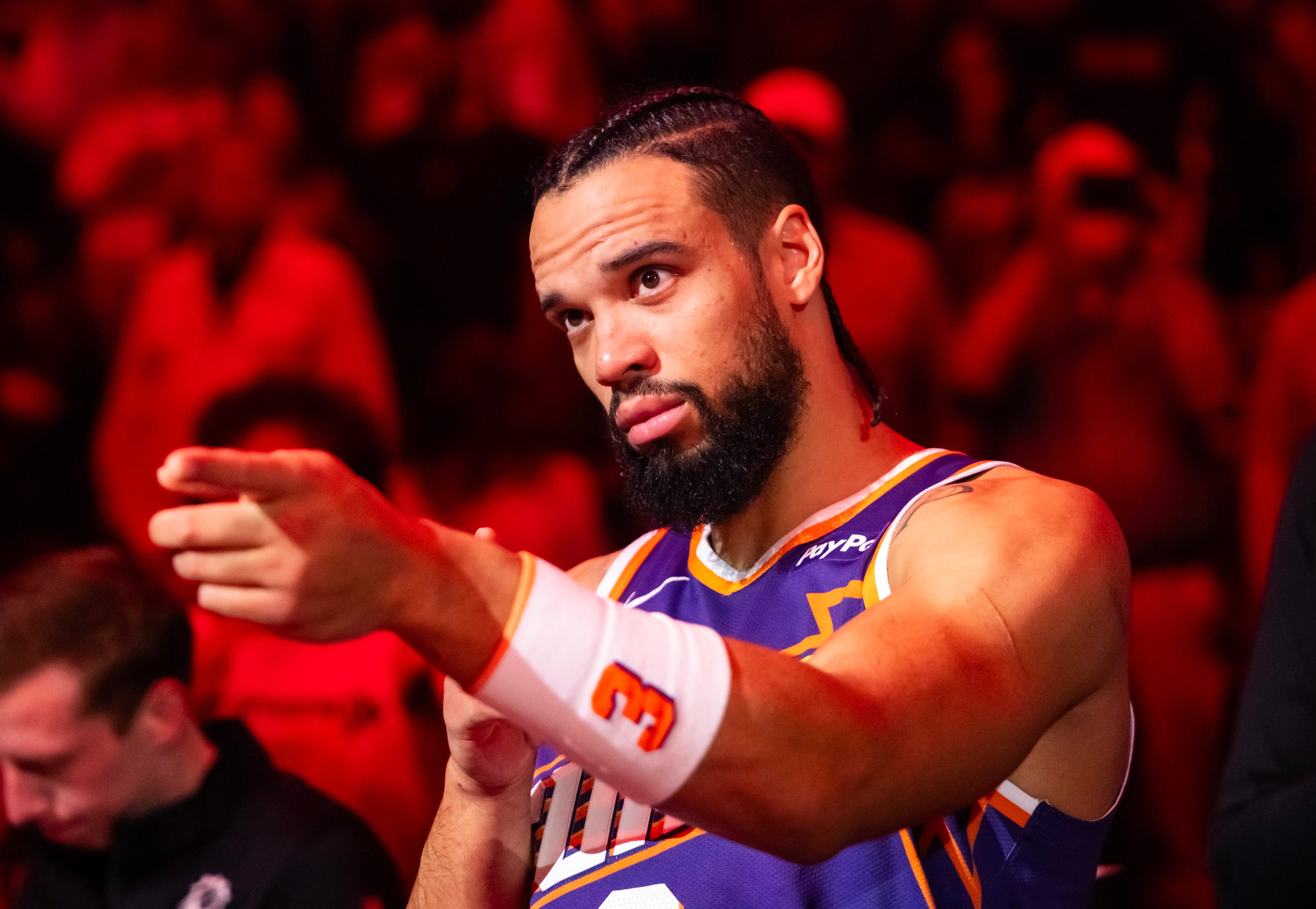
The story has changed.
His teams have succeeded since he left Memphis; Memphis has struggled. Narratives don’t need to be fair to be powerful, they just need to feel true enough.
Loaded with power and a backstory, Dillon is finally being seen in the light.
He didn’t accelerate his rise through podcasts or social media drama. His villainy played the long game — existing only in the scope of basketball — and it paid off.
This week, Dillon Brooks threw shots at LeBron James after scoring 33 points in a regular season win, and instead of picking at him, social media celebrated him.
His rise is complete.
Dillon Brooks is the perfect villain.
 | A guest post by
|
I think that often when there’s a heel-turn in the NBA by an already great player, they usually leave the team with less success. Like when KD left the Thunder, they were a first round exit the following season and didn’t make a ton of noise until amassing an infinity stone’s worth of players and draft picks. So there isn’t really that sense of vindication or justice within Thunder fans.
I think ultimately a villain in the NBA, at its core, is a foil to a hero. Someone who is likely playing the same position as the hero of the league so there’s lots of one on one play and apples-to-apples comparisons with respect to stats. They also have to play against each other a lot so as to make it marketable.
The problem with the NBA today (Bron heading towards retirement with a lot of other household name superstars aging) is that the villain has to be someone who can compete with the face of the league, which we don’t have a new one quite yet. One could argue SGA, but there’s so much memeing and other sentiment online about his foul-baiting tactics being a pain to watch.
In my ideal world, the story would have two backcourt guards thrive on a big market team together and playoff success or maybe a chip together. One abruptly leaves to a worse team (with some accompanying media drama, maybe some narrative about being in the shadow) and both of them skyrocket into superstardom. by putting up insane number and amazing records for their respective teams. One of these guys has to be the widely beloved household name face of the NBA. Then they meet in the finals or something. Then the narrative is always one-to one against the arch rival, backstabbing villain. But at the core of it all, they’ve both GOT to be superstar basketball players.