

Exits: Eras in altitude
There's been speculation the Denver Nuggets are at "the end of an era," but as in life, how can we know when one's over?
Let’s start with the end.
The Denver Nuggets lost in a 6-game series to the Minnesota Timberwolves on April 30, 2026.
Nikola Jokić averaged a triple double across the series, but inefficiently. Rudy Gobert played really well. Murray could never shake Jaden McDaniels. Cam Johnson had a good series. Spencer Jones worked productively on both ends in game 5. The rest of the Nuggets struggled.
Whether the issue came from a scheme, injuries, or roster construction, the result was the same. Denver worked harder to score than usual and did not sufficiently defend their own basket. The Denver Nuggets 2025-26 season ended in the first round.
Let’s listen to N.K. Jemisin and try the ending again, writ continentally.
As the crow flies, around 1,100 miles (1,500 km) separate the cities of Denver, Colorado and Minneapolis-St. Paul, Minnesota. Both are mid-sized cities located in the United States, a country in the Northern Hemisphere of the Americas.
Both cities have franchises playing in the National Basketball Association, the premier professional basketball league in the world. With this proximity, the two teams have played each other many times in the last few years. To many, Minnesota’s roster seems to have been engineered by Tim Connelly, an old friend of Denver, to specifically have the upper hand in the matchup. This became evident once again in the 2025-26 postseason.
All of these competitive games can lead to animosity. The fans don’t like each other much, and this is a bit unfortunate. Both cities have histories of recent civic virtue. We should ground ourselves here.
Over this past winter, the domestic security agency of the United States mobilized thousands of officers to patrol the city, ostensibly to identify people who had broken U.S. immigration law. Tens of thousands of residents of Minneapolis-St. Paul countered by strategically protecting their neighbors. By the time the administration declared the end of “Operation Metro Surge,” the administration had lost esteem in the eyes of the U.S. public, but at great cost.
Denver residents extended a spirit of welcome to asylum seekers from across the Western Hemisphere throughout a fraught period of years from 2022 to 2024. Republican governors in Texas and Florida placed thousands of asylum seekers on chartered buses and airplanes destined for cities governed by Democratic mayors. Chicago, Los Angeles, New York, and Philadelphia welcomed many people. Residents in all of these cities worked together to get families shelter, food, and a place to work. But relative to population, Denver resettled and integrated as many or more asylum seekers from the buses and planes as any city in the U.S.
A remarkable era of municipal hospitality when many in the country were growing increasingly unfriendly to newcomers and a forgotten moment in recent Denver history, swallowed up by our memory of other events that have transpired since.
Newcomers originating from places near sea level no doubt had to adjust to altitude in Denver. You have heard about this. We love reminding you about this one. Especially in sports.
This blessing of altitude provides the professional franchises of Colorado with a tremendous advantage, particularly at the end of games when playing at home. In the case of basketball, one of the first signs that I know the Nuggets have a chance at coming back from behind is when the opposing team starts missing their threes. The shots start hitting the front of the rim. Short. The legs are gone. It’s the altitude. We saw a version of this in Games 1 and 5, when the Nuggets pulled away in the second half of each as the Wolves’ shooting started going dry. Opposing players get tired at altitude, it’s undeniably an advantage.
This blessing comes with, if not a curse, a warning. I’m not a doctor, but the relative lack of oxygen at a mile high seems to makes injuries more troublesome. Injuries definitely seemed to affect the Denver Nuggets this postseason. Aaron Gordon didn’t play after Game 2. Peyton Watson didn’t see the postseason at all after reaggravating a hamstring in early April. These things happen to all teams, but it’s the recovery period that seems particularly fraught for elite athletes playing in Denver.
Nuggets partisans can’t blame it all on injuries, though. The Timberwolves missed key guys, too. But Minnesota kept defending and the Nuggets couldn’t. And that was that. After the loss, pundits started calling it the end of an era for the Denver Nuggets.
Interesting. How certain can we ever be that an era ever truly ends? That another era has begun? What constitutes an era?
I think the first time I learned the word was during that dinosaur phase that so many children go through. Triassic, Jurassic, Cretaceous. Around 165 million years that make up the Mesozoic Era. Did the dinosaurs know it was their era?
It’s not just for the kids, either. I might estimate that era as a word is not quite as in fashion as vibe or slop, but it’s close. It was the title of very famous concert tour by a certain very famous musician. People assign themselves certain moments in time when they form certain temporary habits in dress and behavior that are later cast aside. We all do crave some kind of structured periodicity in our lives. There is a yearning to know when one season ends and another begins. A sense that one is trying to situate oneself in a particular season of one’s own life.
People do this with the important stuff, too. It’s a terrible time for democracy at the moment. Earlier this month, the high court of the United States gave a green light to states to rig congressional districts so as to favor the political faction currently in power. This feels like the dawn of a new era (derogatory).
And yet I think back to a previous 2010 court case that my lawyerly friends call Citizens United. Something about a new era in campaign finance, dollars as speech and all that.
But then I think back to 2000, and some kind of court decision involving a presidential election and what were they called, “hanging chads”? Seemed like it effectively decided a presidency, so kind of era-defining, that. When was the start of the democratic backsliding? It’s hard to say.
Pro-democracy folks like myself look desperately at previous eras for guidance. Reconstruction, that was an era. The attempt at rebuilding a multiracial democracy out of the atrocity of slavery and the carnage of the U.S. Civil War. We’re still about this task, if we are honest with ourselves. The historians tell us that there have been multiple Reconstructions in the United States. Multiple attempts to get it right. Definitely two, maybe three, depending on your interpretive delineation.
While interesting, I think it best for pro-democracy folks to cast aside the sequels and just call it Next Reconstruction. Next provides both anticipation and the unfinished nature of the work. The struggle to prevent the concentration of power will never be over, and that is both a challenge and a gift.
We look back to look forward.
Trivial by comparison, but I do this in sports too. I suspect many Denver fans are doing the same right now.
The Denver Nuggets just concluded their 8th straight appearance in the NBA postseason, first arriving in the Jokić era in 2018-2019. They have won many playoff games; they have lost many playoff games. They won a title. But unlike past years, when one could always count on another level-up from Jokić, this coming season seems like it would be unwise to count that as a certainty.
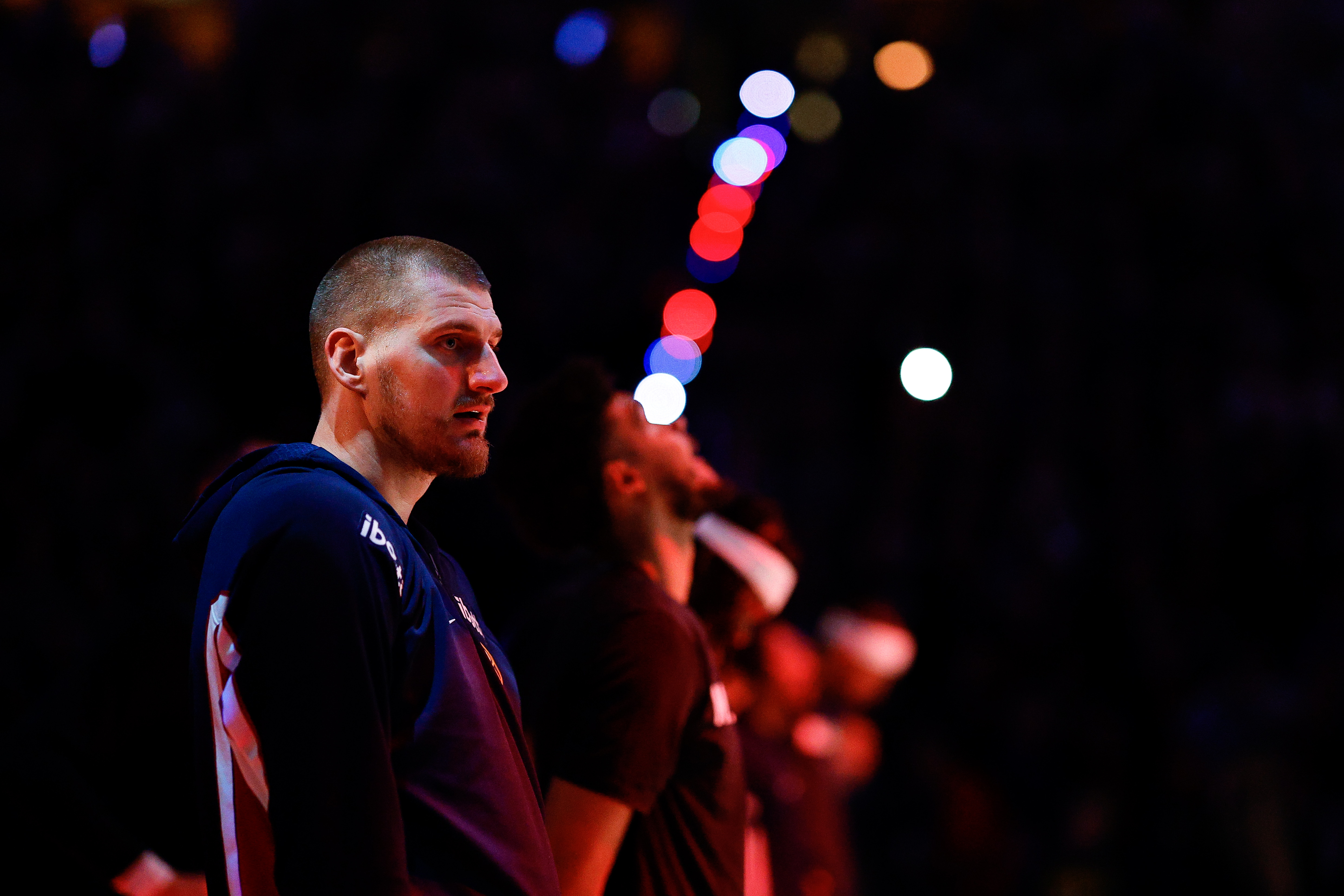
Jokić has a contract through the 2027-28 season but has been eligible for an extension since last summer. When asked about the extension after the Game 6 loss to Minnesota, Jokić repeated twice, “I still want to be a Nugget forever.”
In the end-of-season press conference, Denver Nuggets President and Owner Josh Kroenke backed coach David Adelman and made clear that Jokić was safe. No changes there. Then he noted that such certainty could not be extended to any other player on the Denver Nuggets, saying “Continuity is a powerful thing. But change is also a powerful thing.”
End of an era? Hard to say.
One meets the most interesting people on trains. I was on the California Zephyr when I got to chatting with a gentleman visiting from an East Asian country who was touring the United States. He was making a special trip to Denver and planned to spend a single night. Naturally, I asked him if he was going to see the mountains. That’s usually what visitors do.
“No. I’m going to watch the Nuggets. I want to see Nikola Jokić pass the ball. I want to see him play.”
How things change. People now cross continents to spend only a few hours watching the Denver Nuggets. I still remember seven-year-old me, suffering through that 11-71 season. He would never believe what I could tell him today.
What a different era we live in. I look forward to Next Season.
 | A guest post by
|
“Did the dinosaurs know it was their era?” made me grin out loud 🙌
Coming from where we come from, the fact we even get to debate the possible “end of an era” for the Nuggets is something to cherish. Thanks for this essay, Adam!