

Degradation by design
Valuation's dark side as seen in the NBA trade deadline, gutting of The Washington Post, and Giannis Antetokounmpo's investment in the betting platform, Kalshi.
I’m getting ready to leave the house to guest lecture at York University, to a class of hopeful writers and journalists, when I read that The Washington Post has laid off a third of its staff. Immediately, I think of Ava.
On the train stories start to pop up. Lizzie Johnson, a correspondent in Ukraine, found out she lost her job while reporting in the middle of a war zone. The Post’s Books section, all of its photographers, and its Sports section — gone. I think of Candace Buckner, Ben Golliver; I think back to the NBA Bubble, how Ben was one of the only journalists to go because The Post was big and stable enough to foot the costs, how ostensibly they saw the value in what a one-off, culturally and historically (eventually) significant event it would be. I have a small, selfish thought that a week ago Dan suggested I pitch a story idea to the paper.
On campus, walking Niko and I to the lecture hall, Pasha asks if my phone has been blowing up. It takes me a second to place what he means: the trade deadline. I admit no, I don’t pay close attention, it being one of my least favourite mainstays of the NBA season. But with the deadline as with what’s been done to The Post, it’s a conversation about value.
Value’s perception, value’s influence, value’s arbitrariness.
In the trade deadline value is assigned to people by what they bring to a team or, what a team gains in ditching them, their positive taken in subtraction. They represent a certain skillset or position the team acquiring them is without. The person may just be younger than whoever it is they are replacing, the franchise trying to bring its median age down. Especially arbitrary is the salary element, when people are swapped or jettisoned so their team’s books can be balanced or a cushion made to absorb a future salary, all to avoid the league’s luxury tax.
An athlete’s perceived value going into the window of trade season (this season, December 15, 2025 to February 5th at 3 p.m. ET) is fluid, can change because of injury or because the trending tide of opinion suddenly shifts. There are deadlines where it seems every team is clamouring for a centre, say, and could care less about guards, or when an athlete once sought after falls out of favour.
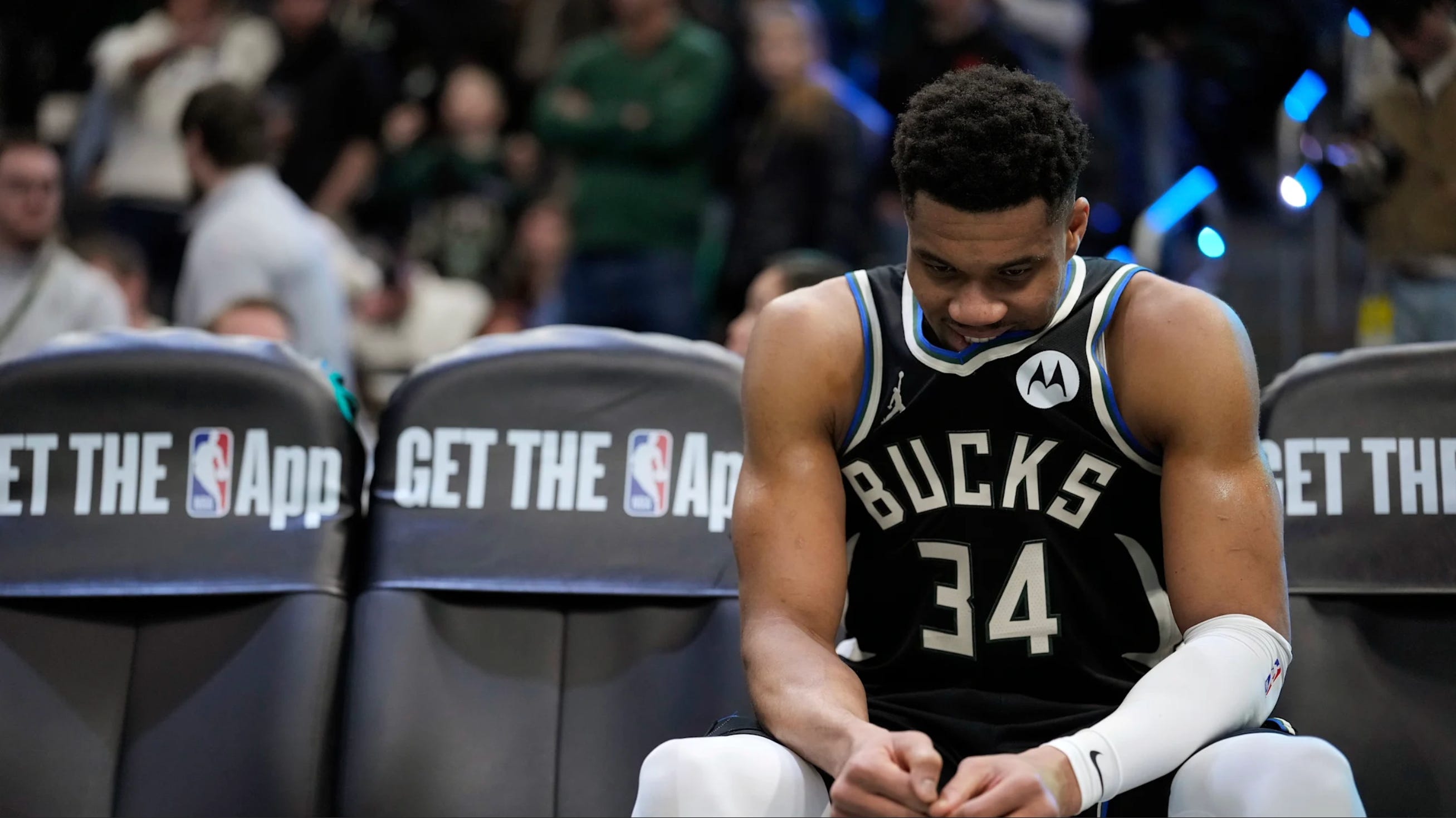
There are new wrinkles as value and its manipulation in the NBA evolve. The Groundhog Day-esque, will-he-won’t he demand a trade saga of Giannis Antetokounmpo took a new turn when Antetokounmpo announced this week he had an ownership stake in the real-world prediction market, Kalshi. The NBA’s CBA says players can hold passive investments in sports betting companies, but not if that company endorses NBA-specific betting. Kalshi enables unregulated betting on everything from sports to geopolitical events and while technically legal, feels deeply problematic if you are at all concerned with the commercialisation of human existence and the predatory bent therein.
It’s also very easy to manipulate. While you can’t make an explicit claim that Antetokounmpo manipulated his own status with the Bucks in order to personally profit from the resulting confusion, the company he’s now a shareholder in is where you would go to bet on him staying or going.
Some might argue this is just the democratisation of valuation. That in a pro athlete’s case — and perhaps especially in Antetokounmpo’s, who grew up in social and economic precarity — this could be framed as a reclamation of autonomy. To set the market on your own speculative prospecting. Maybe, but it also feels gross. Antetokounmpo is one of the NBA’s biggest stars and, while I understand this is all happening against the backdrop of our hyper, everyone-out-for-themselves phase of late-stage capitalism, there is a morality aspect. Not in a holier-than-thou way, but as a baseline. A human blueprint going forward. If value as a concept becomes not just fluid, but flippant — like betting on the likelihood of future world wars in the same transaction as betting on the next team Antetokounmpo could play for — where does that leave us?
And certainly, that’s a big weight to rest on Antetokounmpo’s shoulders, but athletes have firsthand understanding of valuation as a slippery condition. A quality that is never permanent because it’s assigned by people, subject to changing whims, trends, suggestions, influences soft and threatening. I am also very tired of being told there is no responsibility that the more upwardly mobile or financially sound have compared to anyone else. Especially when we feel in real-time the ripple effects of what that class decides to value, or put its effort into eroding, and how time and time again the destructive creep is felt most acutely by, or comes for what serves the average person.
Which brings me back to The Post.
Because this is the point, right? To cut, gut, slash, carve, hollow. To reduce news to what can be automated, not just manipulated but inputed, to take away the people who question, report, who hold power to account.
It feels like every week I see more friends and colleagues in the sports media space, the media space at large, losing jobs at the whims of ignorant, blithe, wealthy hacks and cons. It feels strange to realise I’ve been in media, in one way or another, for nearly two decades. I started at VICE in 2009 and have had one foot in this world ever since. The downsizing, the “pivoting to video” or whatever the current iteration of the same impulse (A.I., right now), no wonder my response to it feels like a reflex. To duck and cover, then come out to assess the new cratered landscape.
At first, I thought the tech and finance tycoons buying up publications and gutting them for profit were all the same kind of stupid because that plan fails every time, in the exact same way. Then I realised that failure is the point.
When the population can’t read widely (21% of American adults are illiterate, 54% read below a 6th-grade level) or well (44% of American adults report not to have read a book at all in the last year), or think critically, then the value of art and culture, reporting and criticism, ceases first to land, then to matter.
At the level of pure optics, when the section of a legacy newspaper dedicated to books and the arts, or to sports (which is and always has been the story of people, or, another entry point into narrative and plot-driven stories), aren’t only downsized but removed entirely, the signal becomes that these things don’t matter. We value what we see, and what we sense we’re seeing a lot of. Huh, we think, this person/trend/news seems to be everywhere, I guess I better pay attention.
When the medium for engagement is controlled, or removed entirely, it’s no longer just a question of optics. The choice of consideration — and the value passed along in it via our attention — is gone. So is the choice itself.
The cuts The Post made this week are a blow to the news media and the media landscape, they’re also a destabilising blow to our perception of what’s valuable and important and within that, the framework for how we view the world. Media’s diminishment, indeed the spin that its always a fiscal move, is by design. When money is at the utmost in our hierarchy of what’s valuable and therefore important, we tend to believe explanations that centre it without any interrogation.
With the NBA’s trade deadline, teams that wind up giving up the least to receive the most are considered winners, but this still comes down to retaining money. Teams that “overpay”, or get back less or even an equivalent (quite literally, one person for another), the losers. What’s considered a good trade is rarely, if ever, decided on meeting a competitive need alone. Fans seem to absorb the financial woes of their team’s ownership when god knows, none of the owners are losing sleep over the numbers adding up. Jeff Bezos, The Post’s owner, could foot the hundred million it was reported to have lost in 2024 with what he earns in less than a single day.
I don’t know when we started carrying water for billionaires, buying the belief that being rich means being inherently astute, culturally curious or fiscally intelligent, but there’s nobody more pleased than them that we did.
One of the questions Niko and I were asked by a student was how to get a toehold in a digital landscape that looked so different than when we’d both got started, was so much more saturated. And it was true, as we’d rattled off places we used to write for — Huffington Post Canada, Yahoo Sports Canada, VICE, Dime, a handful of local Toronto indie papers — we paused with each name, cataloguing the fact that they didn’t exist anymore.
I think it’s insulting when professionals offer hopefuls wanting to get into their line of work the advice of, “Find another field” or plainly, “Don’t.” This happens particularly frequently in media and sports media. Because however light or well-intentioned, the reality of that projection is guarded. It also concludes that there’d be no people coming after the ones holding the jobs now, so this would all go away.
Scarcity, despite what we’ve been conditioned to believe, doesn’t create value. It perpetuates and normalizes desperation; cements the idea that the bare minimum is all we can hope for. This work, certainly my work, is in conversation — it needs other voices around it.
In that afternoon’s class, and always, I try to keep my advice tangible. In the niche of basketball writing there are, miraculously still, lots of team sites and blogs that need writers. I also make the point of saying you just have to start. Roughly, badly, not how you picture, and probably different than where you’ll end up, but the value — in a writer’s case — is in writing and in turn, giving somebody the choice to read you. To decide, to choose, again and again.
With the demise of the Post, there is also no real institution left that can dig into the Wizards and maintain sourcing. The Athletic covers the team but they aren’t going to follow up on the owner being mentioned in the Epstein files or the DC Council and mayoral race’s implications for the team’s half billion dollar shakedown of taxpayers. Having the weight of a storied org behind you changes the power dynamic when you’re reporting on powerful people. I have so many complaints about the Post (and their sports coverage) but it is a real loss and we’re all the worse for it.
Excellent article, Katie.
"Value’s perception, value’s influence, value’s arbitrariness."
Indeed, the way value is measured is so arbitrary. I've been thinking a lot about this too. As someone who loves to draw, write, and read (and who has loved ones who are writers and artists), this is personal to me. And yet, I keep hearing the same old refrains, like "AI is inevitable" and little to no concern shown for the artists who are and will continued to be affected by this, not to mention the lack of regard for the environmental and energy impacts that affect us all.
This brings me back to the layoffs at the Washington Post and what you said here: " And it was true, as we’d rattled off places we used to write for — Huffington Post Canada, Yahoo Sports Canada, VICE, Dime, a handful of local Toronto indie papers — we paused with each name, cataloguing the fact that they didn’t exist anymore."
Plus: "When the population can’t read widely (21% of American adults are illiterate, 54% read below a 6th-grade level) or well (44% of American adults report not to have read a book at all in the last year), or think critically, then the value of art and culture, reporting and criticism, ceases first to land, then to matter."
That worries me, especially given how disinformation and misinformation continues to proliferate. Truth is invaluable. Yet, as you pointed out, so many publications do not exist anymore and there are so many cuts to newsrooms.
This is dangerous.
I'm going to quote Mon Mothma from the Star Wars show, "Andor". It may be a fictional show, but her quote is spot on:
"The death of truth is the ultimate victory of evil. When truth leaves us, when we let it slip away, when it is ripped from our hands, we become vulnerable to the appetite of whatever monster screams the loudest."
And yet, truth continues to be devalued. There continue to be attacks on the press and anyone who dissents, even those who give the mildest dissents, is attacked too. Authoritarianism continues to grow. There is so much gaslighting. Meanwhile, as you mentioned, many are illiterate and many more aren't reading. This will likely worsen as generative AI continue to be used to summarize books and documents and "create" art.
""Value’s perception, value’s influence, value’s arbitrariness."
Your article also reminds me of how labels are being used to devalue people. There are so many of them (more than can be covered by a comment) but one that I see used often today is "illegal immigrant". It's being used to justify atrocities, like terrorizing communities, taking away the rights to due process, and detaining people in horrific conditions.
Onto a different, but also related subject:
"Some might argue this is just the democratisation of valuation. That in a pro athlete’s case — and perhaps especially in Antetokounmpo’s, who grew up in social and economic precarity — this could be framed as a reclamation of autonomy. To set the market on your own speculative prospecting. Maybe, but it also feels gross. "
Yeah, I feel the same way about these betting websites. I remember hearing reports about betting markets on likelihood of wars and that disgusts me. War is horrific. The destruction is immense and impossible to describe adequately in words. The fact that people make bets on this is definitely problematic to say the least.
Last, but not least, what you said at the end really resonated with me too.
"In that afternoon’s class, and always, I try to keep my advice tangible. In the niche of basketball writing there are, miraculously still, lots of team sites and blogs that need writers. I also make the point of saying you just have to start. Roughly, badly, not how you picture, and probably different than where you’ll end up, but the value — in a writer’s case — is in writing and in turn, giving somebody the choice to read you. To decide, to choose, again and again."
So true. There are still many opportunities. And, you captured the essence of what it is like to write and to share one's writing. When we share, we definitely give someone the choice to read our works. It can be quite scary too, especially given different risks, like the possibility of being trolled or not being read (due to algorithms, cuts, etc.) But we keep going. We keep creating. And I'm grateful to be able to read your works :).
Wishing you all the best, Katie. Sending you my support.